

When the rest of Groombridge (apart from the bakers and parents of small children) were asleep, a lucky band of us were scanning the darkness for bats last night.

Led by James Duncan from Sussex Wildlife trust, and clutching bat-detector devices, we headed down to the banks of the Grom by Groombridge Place. As the sun set, James told us about the 18 species of bats that live in the UK.
The most common, and the one you are most likely see above your gardens or flitting around street lights – the Common Pipistrelle – needs to eat 3000 insects a night.
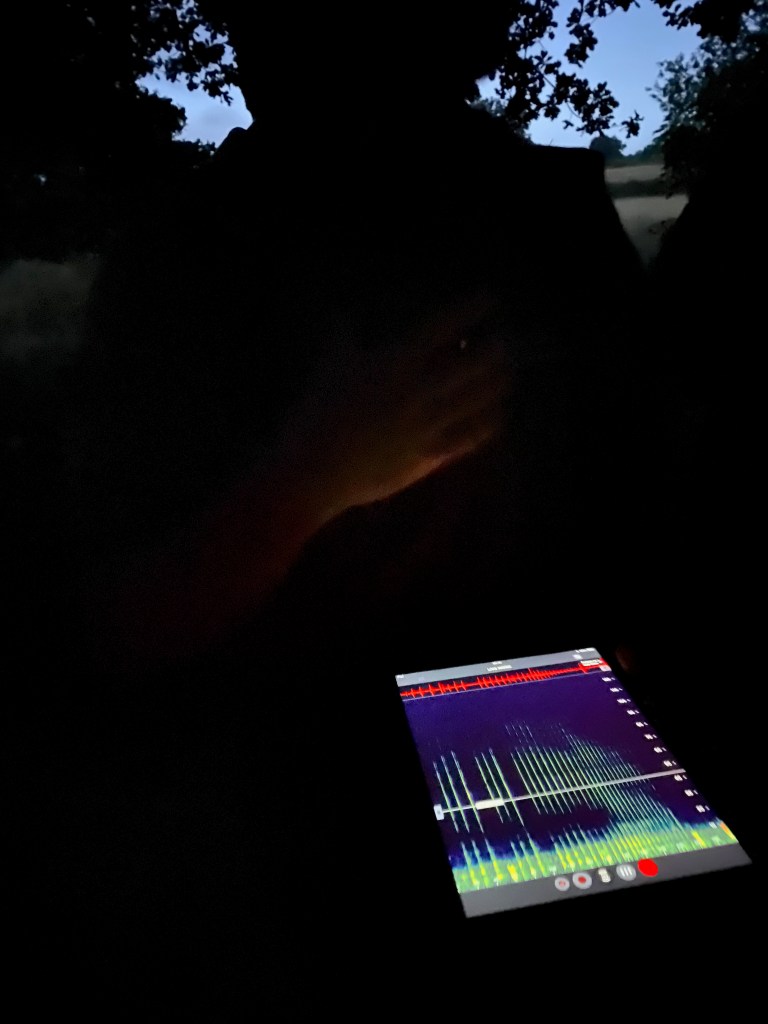
And there they were above our heads, Common and Soprano Pipistrelles, both tiny, hunting in the lime trees by the river. Our devices picked up their echo-locating, and the zzziiiippp as they homed in on their prey and caught it. James’s iPad showed us the sound in visual form, each kind of bat making a distinctive shape.
While Pipistrelles can tolerate some light, other bats need total darkness so we headed down to the canal and there we picked up Daubenton’s bats, flying low over the water, their wings picking up the light of one faint torch, back and forth, over and over, catching midges and other tiny insects.
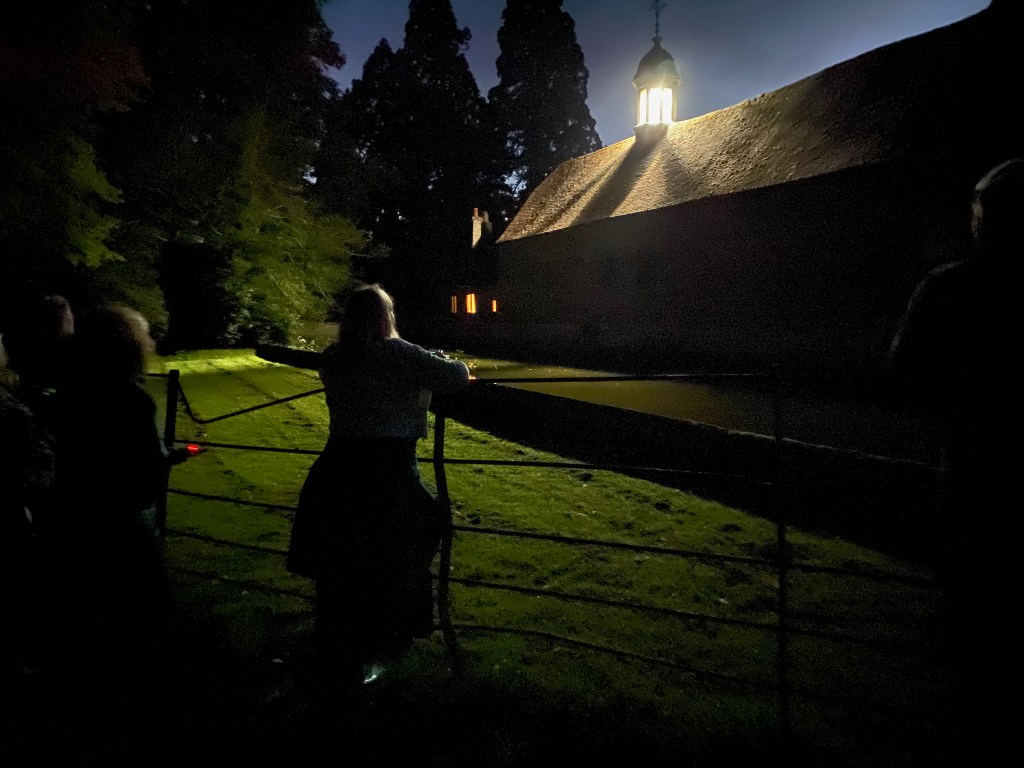
Heading home at well past 11pm, our bat detectors sang into life as we approached the moat at Groombridge Place – it was pitch dark by now – and there in the light of the house, countless Pipistrelles zipped about over the water, pale and delicate in the glow.
So if you’re out late, keep your eyes open for the flicker of a bat above you. And if you’d like to do good things for our precious, vulnerable bats, here are some tips from James: garden for wildlife, especially growing plants that attract insects, and a pond is brilliant; avoid pesticides; turn off outside lights; don’t block up holes in older buildings.
There’s more about bats at the Bat Conservation Trust, and on Sussex Wildlife Trust‘s website (Sussex is a brilliant place for bats!).
 Wild Groombridge