
Butterfly Conservation’s citizen science project is on right now – It takes just 15 minutes to take part in the butterfly count. Choose a sunny spot up to the 4th August and simply count and record the number of each type of butterfly and moth you see.
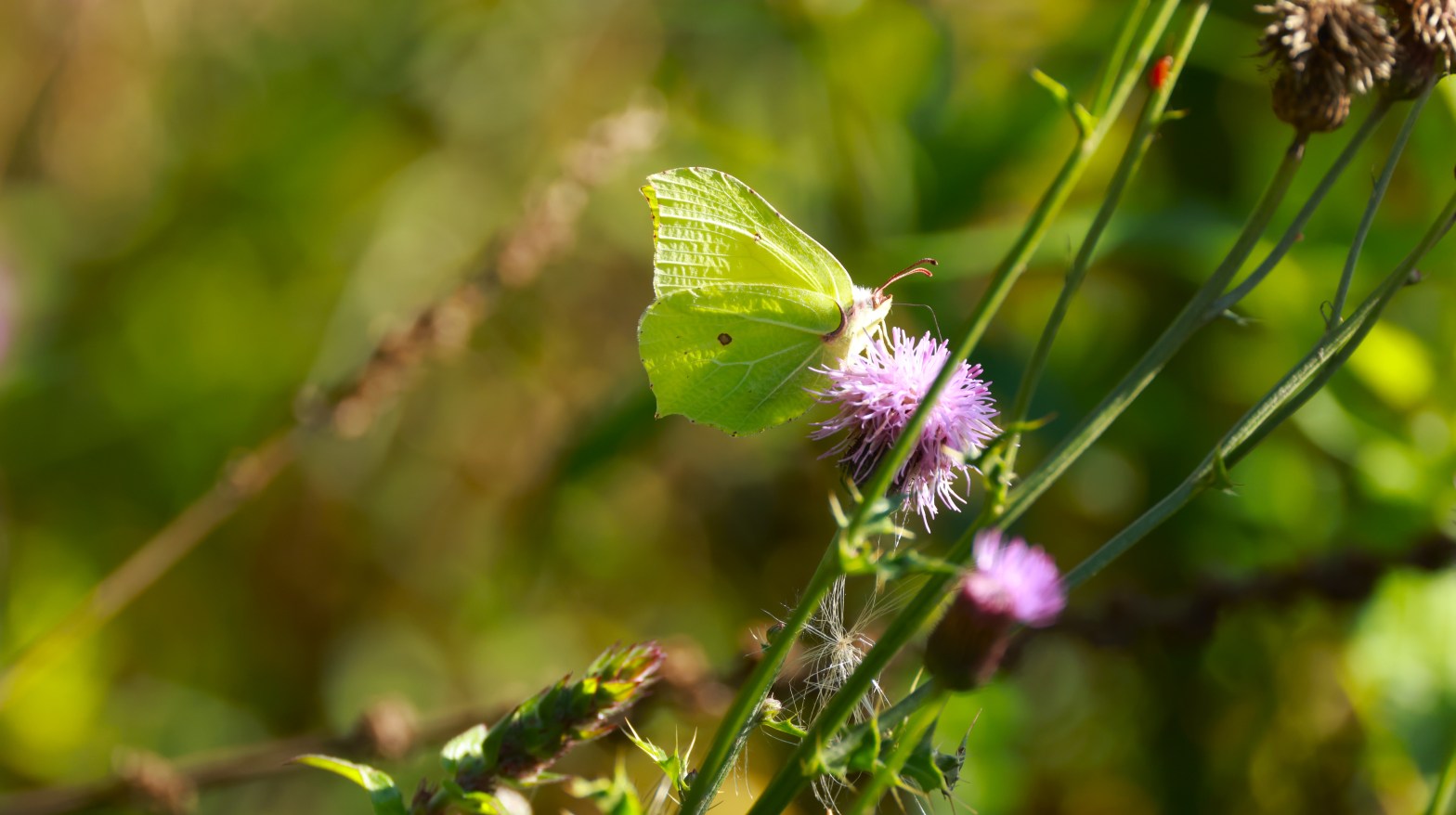
The featured image is the Brimstone.
The ID sheet below shows the more common butterflies to look out for – you can download a higher resolution version here: https://bigbutterflycount.butterfly-conservation.org/assets/charts/butterfly-id-sheet-england.pdf
Just sign in or register and follow the instructions adding your count here
https://bigbutterflycount.butterfly-conservation.org/map
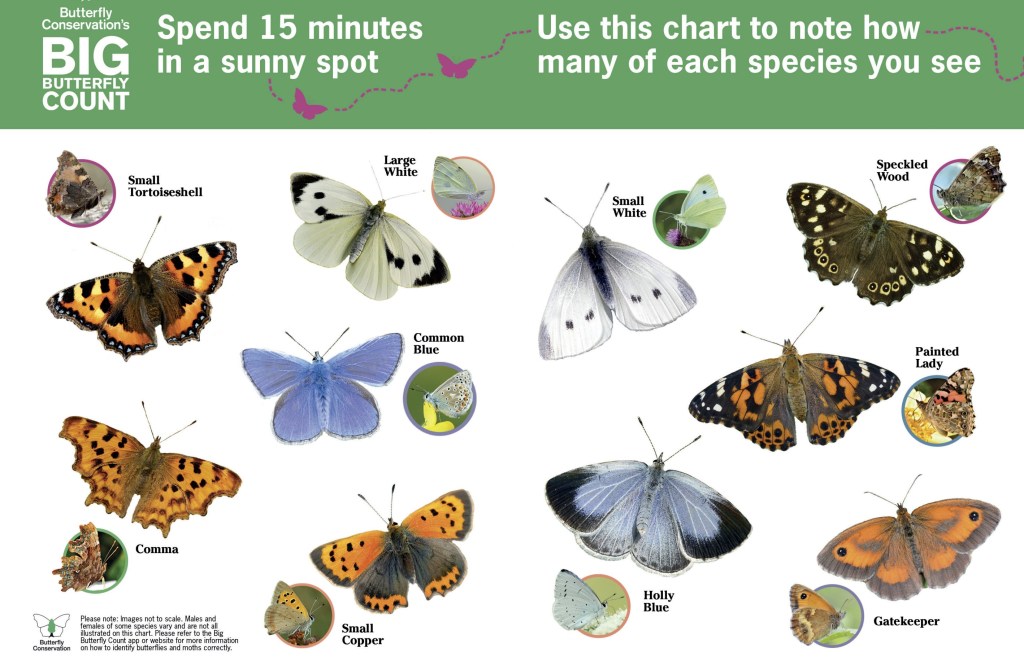
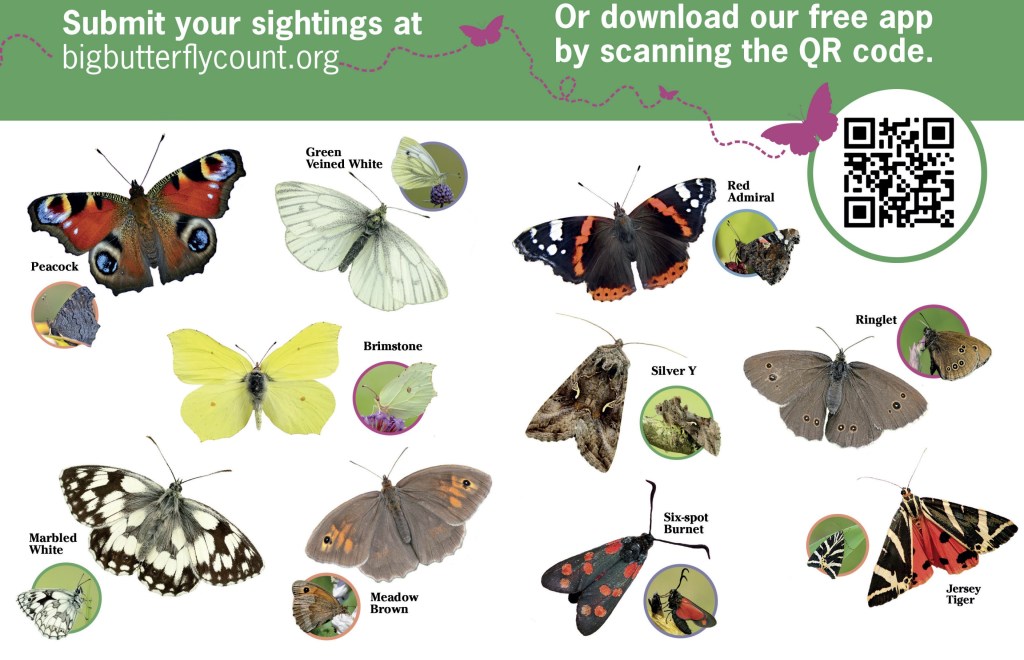
This year, so far, the most abundant butterfly in the UK has been meadow brown – they are one of the few species that you can find even in overcast conditions. Last year Red Admiral was in the top spot followed by Gatekeeper then the Large and Small whites.
Perhaps not surprisingly, UK butterflies are under threat from climate change, insecticides and intensive farming. As butterfly Conservation puts it “Butterflies and moths are natural indicators of how well or poorly our environment is doing, and it’s clear that something is most definitely wrong. Seeing a butterfly or moth shouldn’t be a rare thing, but 80% of butterflies have declined since the 1970s……we may be the last generation to enjoy butterflies and moths in abundance”
There are some positive signs though as many farmers are adopting nature friendly techniques following the example of RSPB Hope Farm.
We can all make a difference in our own gardens with nomow May or leaving areas for wildlife. Creating a wildflower bank will attract bees and butterflies and Wild Groombridge can help by providing Wealden native wildflower seed (donated by Withyham PC) . Just send us an email on our website and we’ll reserve some for you to sow this autumn. We’ll also explain how best to prepare your garden before sowing.
July 2024
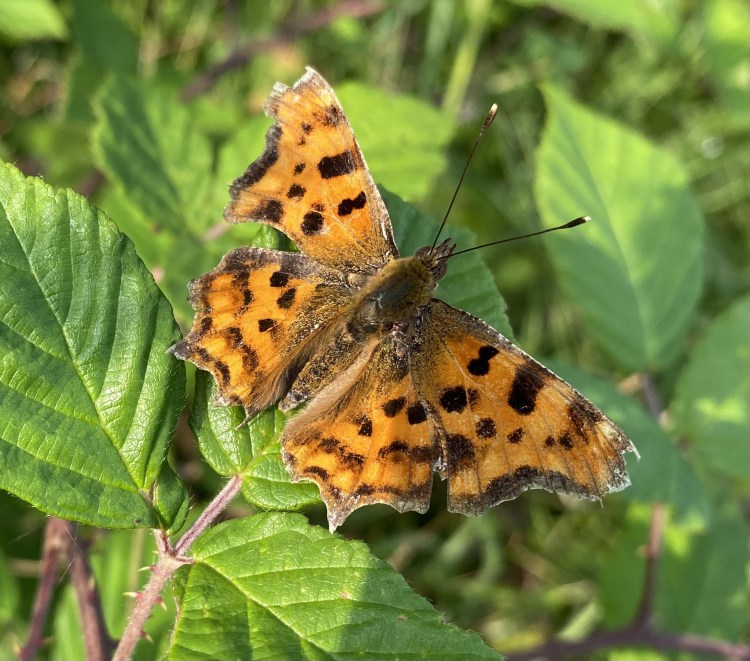
Comma
 Wild Groombridge