

There’s always a buzz when people spot a hornet – they’re so much bigger than bees and wasps, and to be honest, they look a little bit scary if you don’t know anything about them.
But we’ve had hornets in our garden for years and they really aren’t aggressive, even when they wander into the kitchen. (This is a photo from late October 2022 in Sarah’s garden.)
In fact, European Hornets (vespa crabro), which are the hornets we’re all used to seeing, mostly keep clear of people. They don’t attack unless they feel threatened, so leave them alone and they’ll go about their day quite peacefully.
They’re about twice as big as a wasp, with the queen even bigger – up to 4 cm long. But their sting isn’t any worse than a bee’s. They’re unlikely to bother you at the dinner table, though they will come towards light at night.
The queen builds a nest in spring (she’s the only member of the colony to live through the winter) in which to lay her eggs and build a new colony. We don’t know where our hornets’ nest is but it’s never been a bother.
And they’re great to have in the garden because as well as seeking out flowers, they’ll predate on invertebrate pests, which helps keep our organic veg patch in balance.
Asian Hornets
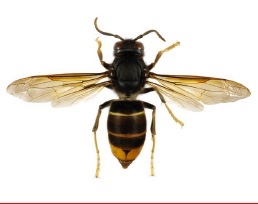
But there’s a new hornet on the block – the Asian Hornet (vespa velutina) – and it’s a problem because it’s attacking our honey bees and other insects. (Photo: Q Rome)
If you see an Asian Hornet, it’s important to report it – there’s still time to stop them spreading and to protect our already struggling bees and insects.
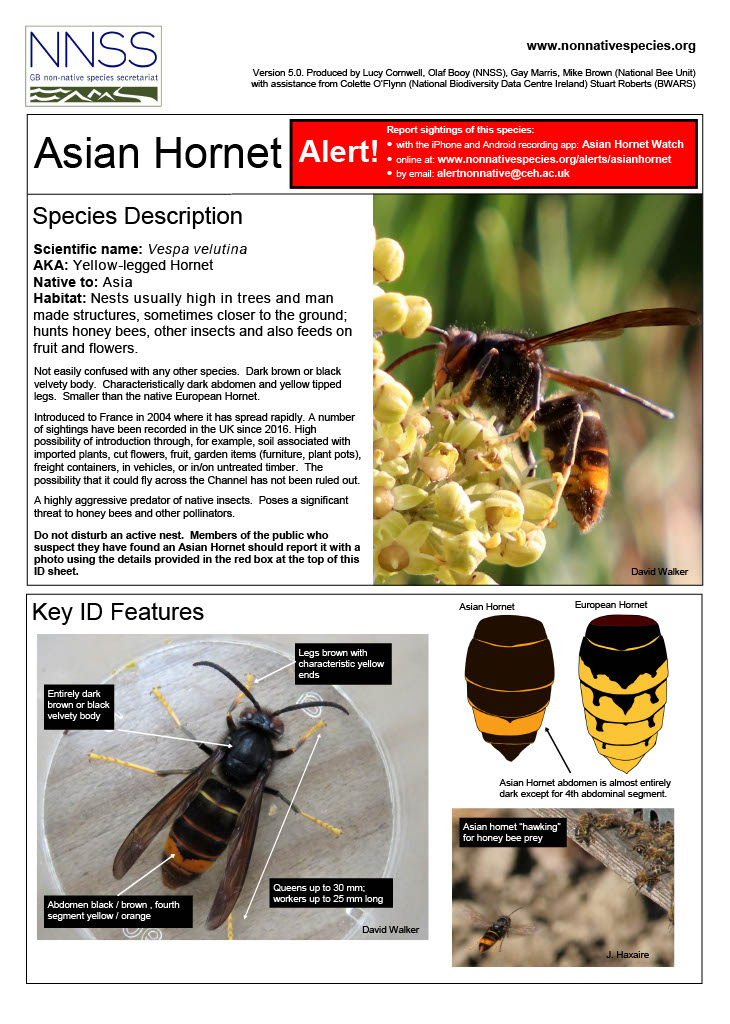
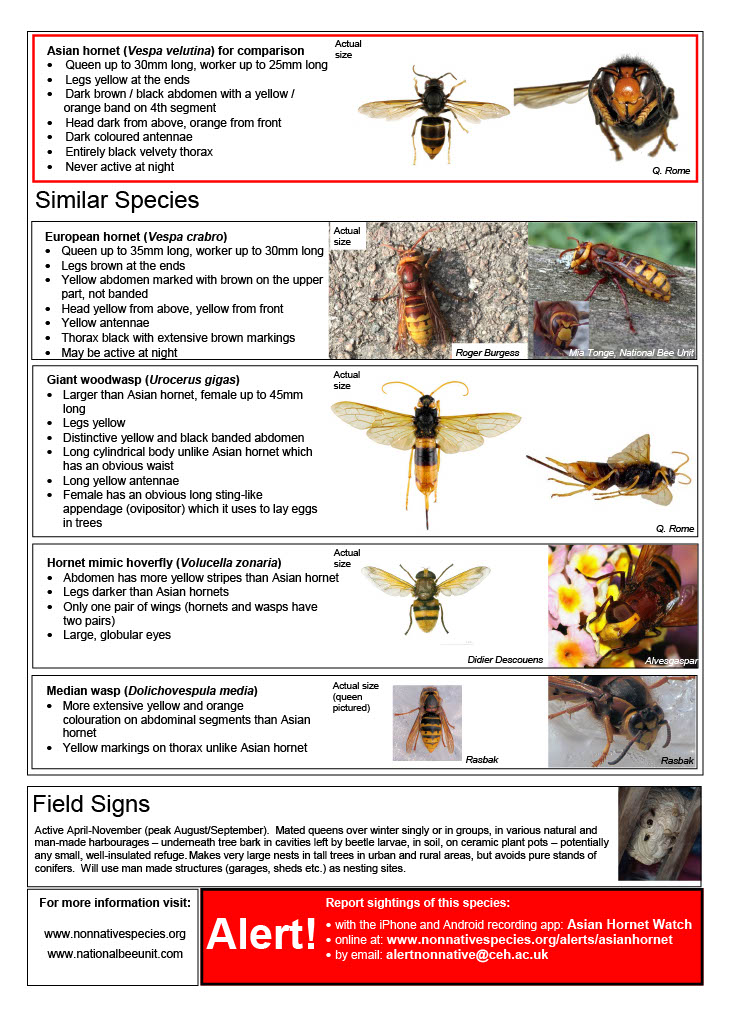
It looks quite different to the European Hornet, being much darker, with brown legs with yellow tips.
Here’s a fact sheet to help you identify any hornets you see. It tells you where to report an Asian Hornet too.
 Wild Groombridge
Hi
Thanks for posting the information about Asian Hornets. It’s really important that we destroy any nests found before they reproduce and send out new queens ready for next year.
It will be very important to trap any queens in the Spring next year that have hibernated overwinter.
LikeLike